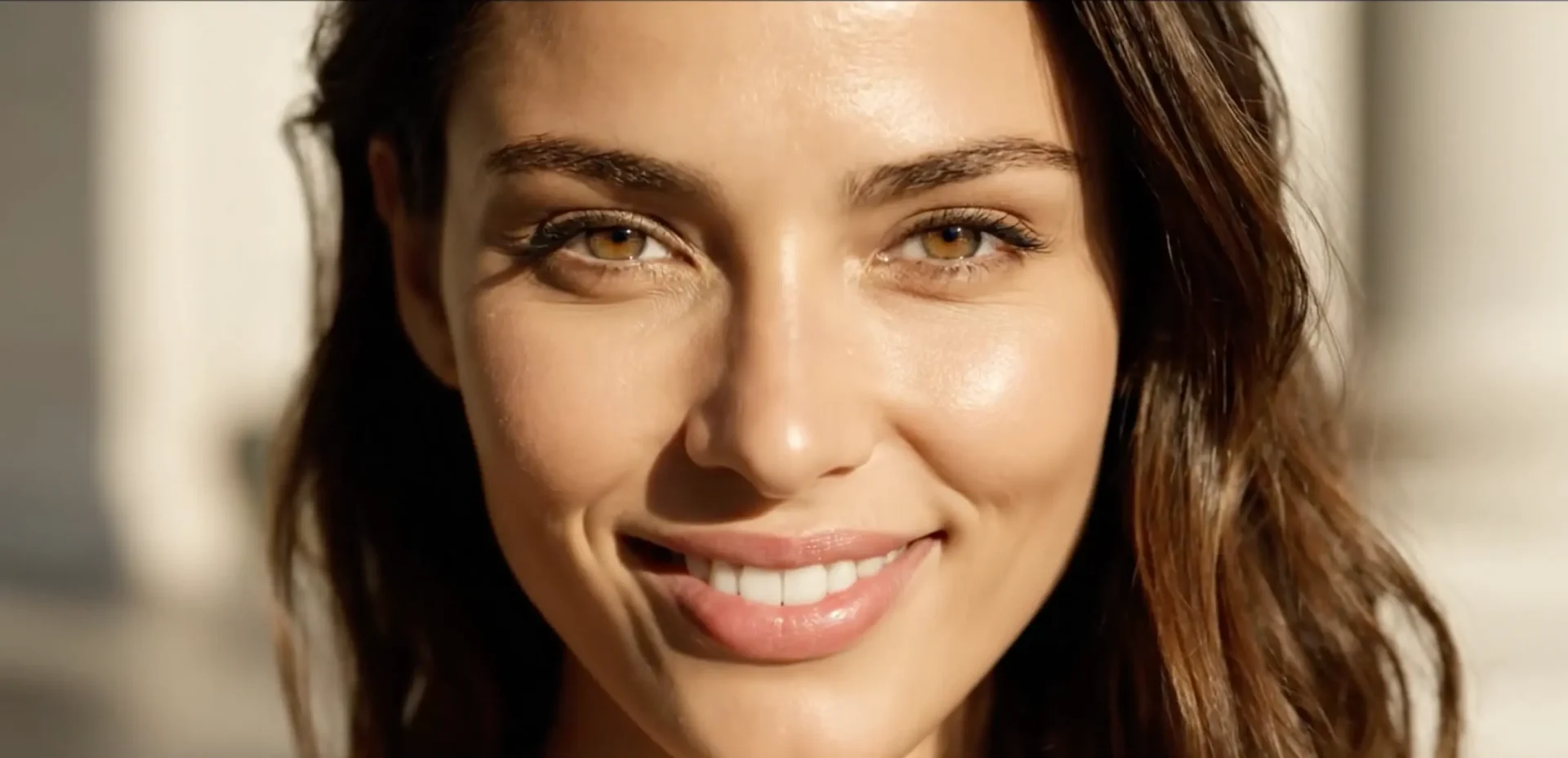
Feldspathic Ceramic Veneers.
Naturalness, Measurement, Control.
"A perfect veneer is one that no one notices. You only see a natural, bright smile that seems to have always been there."
When Veneers Make Sense
Veneers make sense when they serve to improve the smile in a credible, stable and proportionate way: discolorations that do not respond to whitening, worn shapes, small misalignments or visible anterior restorations that alter the overall harmony.
Not all aesthetic requests go in the same direction. For this reason we first define the objective, limits, quantity of enamel available and desired naturalness. Feldspar ceramic comes into play when the priority is an outcome that feels like it was born with you, not built on top of you.

For Whom This Path May Be Right
The correct decision is not "yes or no veneers", but understanding whether they are the most coherent solution for your smile and your face.
Discolorations and Old Visible Restorations
When the color is not harmonious or old anterior composites make the smile uneven, veneers can restore uniformity without distorting the expression.
Shape, Wear, Microcracks
If the front teeth are abraded, shortened or have lost definition, veneers allow you to reconstruct proportions and light in a conservative way.
Selective Aesthetic Corrections
When the problem is mild and localized, veneers may be a more direct choice than longer treatments, provided the case is well indicated.
Second Opinion on Aesthetics
If you fear an effect that is too white, too uniform or too "fake", the point is to clarify the design, materials and limits before taking an irreversible step.
Those Who Stopped Showing Their Smile
The hand in front of the mouth, the photos avoided, the smile held back even when it would be spontaneous. If the smile has become something to hide, the path starts from there: understanding what would make it yours again, without forcing and without generic promises.
The Tooth First, Then the Material
Discolouration, a worn edge and misalignment do not necessarily call for the same solution. We assess available enamel, existing restorations, gums and function before choosing between veneers, adhesive restorations, whitening or orthodontics.
Hand-layered feldspathic ceramic is one of the options we work with, not an automatic response to every aesthetic request. Thearticle on materials and a natural appearance sets out the criteria to discuss during your visit. For those travelling from afar, we prepare useful information in advance without anticipating a diagnosis or shortening clinical timelines.
How We Get to the Result, Before Touching Your Teeth
A multi-step process designed to clarify the result before making it final, without unnecessary acceleration.
Aesthetic Analysis and Smile Design
3D scanning, clinical photographs and analysis of facial parameters according to Fradeani's Esthetic Checklist. We digitally design your new smile considering proportions, symmetry, smile line and harmony with the face.
Mock-up and aesthetic test
When indicated, a resin mock-up allows shapes and bulk to be tried before the teeth are prepared. You can smile, speak and discuss what you would like to change. The try-in guides the plan; its materials and the tissues’ response remain different from those of the final restoration.
Minimal Preparation for the Microscope
Preparation, when necessary, is planned for each tooth and monitored with a Leica M525 microscope, aiming to preserve enamel. No-preparation options are reserved for selected cases: they must not create excessive bulk or compromise function and hygiene.
Artisanal Layering
The master ceramist layers the veneer by hand, layer after layer, replicating the optical structure of the natural tooth: dentin, enamel, individual color effects. Each veneer requires hours of extremely precise manual work.
Adhesive Testing and Cementation
An intraoral try-in with try-in pastes helps assess colour and integration before adhesive cementation. Isolation and the bonding protocol are part of treatment; subsequent reviews check margins, gums and function.

Clinical Criteria and Craftsmanship
The Italian School of Aesthetics
The training background of Dr. Buniato includes the annual Veneers course by Fradeani and Bacherini, fixed prosthodontics with Massironi and rehabilitation with Fabbri. Aesthetic analysis, preparation and digital planning come together in the assessment of each case.
Collaboration with Oral Design brings the ceramist’s work into the plan: shape, layering and characterisation are discussed alongside the clinical findings. The process begins with the first visit, to decide whether veneers are appropriate and which alternatives would best preserve the tooth.
Real Results
The point is not to "change your face", but to restore light, proportion and naturalness to a smile that must seem like yours.

Before

After
When It Is Better to Stop and Clarify Before Proceeding
If the fear is losing naturalness, sacrificing too much enamel or finding yourself with a standardized smile, the correct thing is not to speed up the treatment but to clarify the mock-up, amount of preparation and real aesthetic objective.
Our approach remains conservative: we also consider whitening, orthodontic alignment, adhesive restorations and the option of not intervening. When veneers are indicated, we determine preparation, materials and reviews for each case, without fitting care around a travel schedule.
Useful Insights Before Intervening on Aesthetics
Contents selected to understand naturalness, smile design and value of the first visit when talking about veneers.
Digital Smile Design in Turin: Credible Smile
Digital smile design is a clinical design protocol that allows you to visualize the aesthetic result before any intervention on…
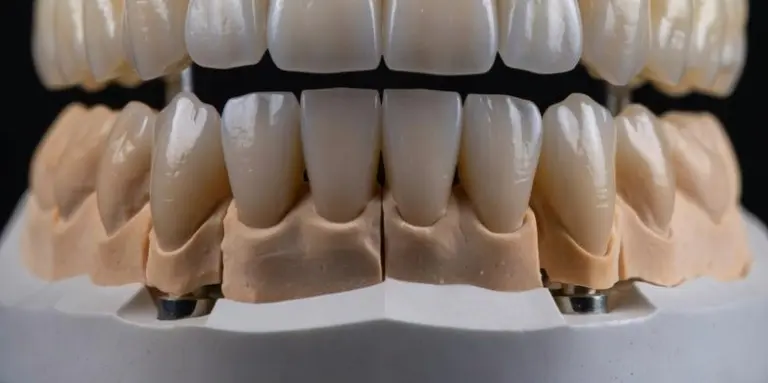
Feldspathic ceramic veneers: indications, alternatives and limitations
Feldspathic veneers in Turin: materials, conservative alternatives, limitations and preparing for your visit. The choice starts with a clinical assessment.
First Dentist Visit in Turin: What to Expect and Why It's Important
The first dental visit is a complete diagnostic analysis — not a simple “look at the teeth”. In Studio Buniato in Turin it lasts about…
Frequently Asked Questions about Veneers
How long do feldspar ceramic veneers last?
Veneers can last over time, but their lifespan is not guaranteed. Indication, available enamel, bonding, loading, hygiene and reviews all matter. The review by Komine et al. (2024; DOI: 10.2186/jpr.JPR_D_23_00151) describes favourable results for silica-based ceramics and emphasises the role of the underlying substrate and bonding procedure. Complications may require repair or replacement.


The dentists are professional and attentive to each patient’s particular sensitivities.
Show less
The practice has a very welcoming waiting room, and all the rooms are bright and clean. The staff are professional, and the reception team is well organised when it comes to information, appointments and email reminders for them. The dentists are professional and attentive to each patient’s particular sensitivities. In conclusion, I am fully satisfied with the treatment and the result achieved.
Do veneers damage natural teeth?
Preparation involves an irreversible change when tooth tissue is removed. The aim is to preserve as much enamel as possible; the amount and depth depend on the case, rather than a uniform thickness for everyone. The Leica M525 microscope aids visual control. No-preparation veneers are an option only in selected cases, to be compared with the alternatives.

attentive and always willing to explain every stage of treatment.
Show less
I began treatment with Dr Gianluca Buniato to straighten my teeth as an adult — I am 40 — and I can say it was one of the best decisions I could have made. Thanks to a carefully planned course of orthodontic treatment lasting less than two years, I achieved results I would never have thought possible: my smile has changed completely and I finally feel confident showing it!
Dr Buniato is extremely precise, attentive and always willing to explain every stage of treatment. The entire team is also kind, welcoming and very well organised. The practice, on Corso Francia in Turin, is carefully designed down to the smallest detail and immediately gives you a sense of trust and calm.
Although I live quite far from the practice, the excellent reviews persuaded me to put my trust in the doctor, and I can confirm that it was the right choice.
I absolutely recommend this practice to anyone who wants to improve their smile with professionalism, technology and plenty of personal attention.
Why choose feldspar ceramic and not zirconia?
Hand-layered feldspathic ceramic allows translucency, colour and characterisation to be personalised. Material choice is not a universal ranking: it depends on the underlying tooth structure, thickness, function and goals. The review by Komine et al. (2024) supports the use of silica-based ceramics for veneers and notes limitations in the available evidence for zirconia veneers.

From the very first appointment, I was impressed by the care and clarity with which solutions were proposed to me
Show less
I contacted Dr Gianluca Buniato’s dental practice for advice and a possible estimate to address my many complex dental problems. From the very first appointment, I was impressed by the care and clarity with which solutions were proposed to me, and I was soon able to see how effective they were. I feel I should thank Dr Buniato and his team not only for the professionalism with which they work in a dental practice using excellent technology, at very reasonable prices, but also for their ability to put patients at ease at all times.
How does digital smile design work?
3Shape TRIOS 6 intraoral scanning, photographs and 3D facial scanning help assess teeth, lips and facial proportions. When indicated, the mock-up allows shapes and bulk to be tried and discussed before preparation. It guides the plan rather than promising a result. Discussions with ceramist Giuseppe Romeo of Oral Design cover shape, colour and characterisation.

He explains what he is doing and what you may feel before each step
Show less
I’m writing a little more than I usually would because I know how difficult it can be to find a dentist you genuinely feel comfortable with — especially when you are looking for treatment abroad. I came to Turin for dental treatment and honestly could not be happier that I found Dr. Buniato.
What impressed me from the beginning was how thorough and transparent everything was. He takes the time to do a proper assessment, with detailed images and analysis, and then explains clearly what is going on, what the different options are, which one he recommends and what each option would cost. You are never left in the dark or simply expected to trust that someone knows what is best for you. You understand what is being done, why it is being done and what to expect.
That same care continues throughout the treatment. He explains what he is doing and what you may feel before each step, so you are never caught by surprise. You can tell that he is incredibly precise and genuinely cares about getting every detail right.
And the result exceeded my expectations. I had virtually no pain afterwards, despite expecting quite the opposite. The work looks excellent, but even more importantly, it feels completely natural. After dental work, there is usually some adjustment period — you notice that something has changed, or your bite may feel different. With Dr. Buniato, I had none of that. Everything felt completely natural from the moment I left the chair.
I was also genuinely impressed by the technical standard of the practice. The equipment and technology are on a level I have rarely seen, and it is clear that they are used with real expertise rather than simply being there for show.
The whole team is warm, attentive and professional, and you get the feeling that they are willing to take the time needed to do things properly.
I would genuinely recommend Dr. Buniato to anyone looking for excellent dental care in Turin. I’m very happy I found him and will definitely be back for my future treatment.
Are veneers always the right choice to improve your smile?
No. Depending on the problem, whitening, orthodontics, adhesive restorations or no intervention may be more appropriate. We first assess health, function, enamel and goals; the material is chosen after the indication and alternatives have been clarified.

From the start, the doctor was very helpful and courteous and clearly explained the work he would need to do.
Show less
I did not know Dr Buniato and found him through an internet search. My old bite splint had broken, and I was looking for a practice that used cutting-edge techniques to make a new one. From the start, the doctor was very helpful and courteous and clearly explained the work he would need to do. Once the splint had been made, we had to meet several times so that he could adjust it to fit my teeth as well as possible. Now I have a splint that does its job perfectly. Above all, I greatly appreciated his human warmth, helpfulness, courtesy, calm manner and ability to explain the various steps that would follow. The reception staff are excellent too. The practice is clean, modern and well cared for. What can I say: these days, a doctor like this is almost a rarity. So I recommend him and thank him sincerely.
Reserve your space
The first step towards your transformation.
Our Patient Care is at your disposal
To start your personalized journey, use our Patient Care, contact us by phone or email. We handle requests with the highest priority and discretion. In case of urgency, we recommend immediate telephone contact.
Opening Hours
Monday - Thursday: 08:30 - 19:00
Friday: 08:30 - 16:00
Saturday - Sunday: Closed
Direct Contacts
Practice phone: +39 011 437 3857
Email: reception@buniato.it
WhatsApp Patient Care (Info/Appointments): +39 342 509 6364
WhatsApp Medical Emergencies: +39 329 473 8155
Reviews and Official Profiles
If you prefer to check before contacting us, you can read the Google reviews or open the practice's official profile on AlfaDocs.
Address
Dental practice Dr. Buniato Gianluca Maria
Corso Francia 30, 10143 Turin (TO), Italy
In central Turin, within easy reach. The nearest metro stop is Principi d’Acaja, a few minutes from Porta Susa, Piazza Statuto and the Cit Turin neighbourhood.