Endodontics under the Microscope.
Save, When It Makes Sense.
Preserving a tooth, when possible, means carefully assessing its outlook and discussing each step of care.
When It Makes Sense to Try to Save the Tooth
Endodontics comes into play when the nerve of the tooth is compromised, when an apical infection puts the maintenance of the element at risk or when a previous root canal treatment has left doubts about the prognosis. The point is not to "devitalize", but to understand whether the tooth can still have a stable and long-lasting function.
The operating microscope Leica M525 provides illumination and magnification to observe the working field and address details that are difficult to distinguish with the naked eye. It does not make every structure visible and does not replace the clinical examination or indicated investigations.
Magnification supports examination and detailed work, alongside clinical assessment and diagnostic investigations when indicated. The possibilities for retaining the tooth depend on the individual case.
Before deciding whether to preserve or replace a tooth, we assess the possibilities and limitations. We discuss the proposed approach alongside alternatives, the steps required and follow-up checks. Scheduling follows the needs of treatment and healing, including when travel needs to be arranged.

ACTEON ultrasonics for root canal retreatment
Alongside microscope-assisted vision, we use an ACTEON ultrasonic system with tips designed for root canal retreatment. When indicated, these instruments help us work on materials and obstructions within the canals of a previously treated tooth. They form part of an approach aimed at preserving the tooth when clinically possible. The choice of instruments and the possibilities for retaining the tooth depend on an assessment of the individual case.
Preserving a Tooth Also Means Considering What Comes Next
Before proposing root canal treatment or retreatment, we consider the remaining tooth structure, gum and bone support, any fractures, and whether the tooth can be restored and protected. Treating the root canals makes sense as part of a sustainable restorative plan.
When recovery is reasonable, preservation is prioritised. If the prognosis is unfavourable, we discuss alternatives and their limitations, rather than keeping a tooth at any cost. Appointments, restoration and reviews follow clinical and biological timelines: travel arrangements do not shorten them.
For a second opinion, you can bring existing X-rays and records to the first visit. The training in microscopy and restorative dentistry undertaken by Dr. Buniato supports this approach; the instruments remain a means to support the decision.
When This Path May Be Indicated
Pulpitis and Infections
Spontaneous pain, sensitivity to heat, swelling. When the nerve of the tooth is irreversibly compromised, root canal treatment removes the infected tissue and preserves the tooth structure.
Endodontic Retreatment
Previous root canal treatment that was unsuccessful or incomplete. Microscope-assisted vision helps identify details and obstacles from the previous treatment; the possibility of retreating and preserving the tooth is assessed case by case.
Traumatism
Crown or root fractures caused by trauma. Clinical assessment, microscopic examination and diagnostic imaging when indicated help establish the extent of the damage and the possibilities for retaining the tooth.
Second Opinion Before Extracting
When you have already been told that the tooth must be removed or replaced with an implant, precision endodontics also serves to clarify whether there is still a reasonable possibility of recovery.
How We Evaluate and Treat the Case
Each phase serves first to clarify the prognosis and then to carry out the treatment under microscopic and radiographic control.
Clinical Assessment and Imaging When Needed
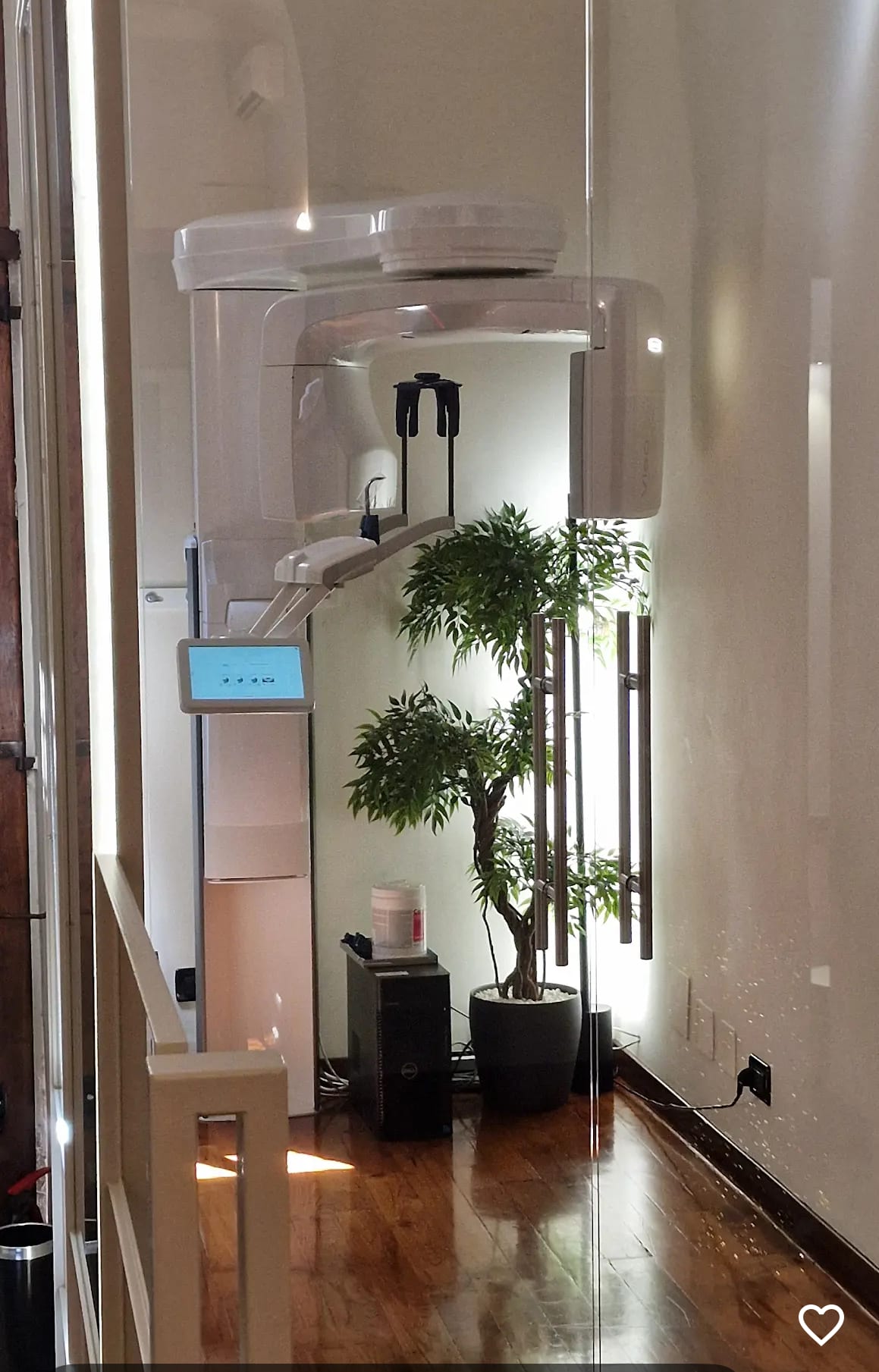
When the case requires it, a localised Planmeca CBCT scan provides a three-dimensional view of the roots, canals and surrounding structures. The images complement the clinical assessment and help inform discussion of the options for preserving or replacing the tooth.
Isolation with a Rubber Dam
The tooth is isolated from the rest of the mouth with a rubber dam. Isolation protects the patient and the operating field during instrumentation, irrigation and adhesive procedures.
Shaping under the Microscope
The root canals are identified, explored and shaped using rotary mechanical instruments under microscope-assisted vision. Hypochlorite irrigation and ultrasonic activation form part of the protocol for cleaning the root canal system.
Three-dimensional filling
Filling with thermoplastic gutta-percha aims to seal the prepared canals. The result is checked radiographically and monitored with the follow-up assessments indicated for the individual case.
Tooth Restoration
The restoration is selected according to the remaining tooth structure and functional requirements. Adhesive techniques and, when indicated, a prosthetic crown help protect the tooth; the prognosis also depends on the initial condition and follow-up over time.
CBCT and the microscope in tooth assessment
CBCT, when indicated, and microscopic examination provide information that complements the clinical examination. They may be useful in calcified canals, retreatments and complex anatomies. The proposed treatment also takes account of the remaining tooth structure, supporting tissues and restorative options.
When a Further Assessment Is Worthwhile
If the doubt is between saving the tooth or replacing it with an implant, the most useful thing is a diagnosis that clarifies the quantity of residual tissue, presence of fractures, quality of previous treatment and real prognosis over time.
If you are worried about root canal treatment or have had difficult experiences, talk to us before the appointment. We explain anaesthesia, possible discomfort and reviews, agreeing on breaks and how to contact us. Managing dental anxiety is part of care, alongside clinical assessment.
Useful Reading Before Deciding Whether to Preserve or Replace a Tooth
Three insights to understand the role of the microscope, CBCT and initial diagnosis in complex endodontic cases.
Deep tooth decay: can the tooth's vitality be preserved?
Deep tooth decay: diagnosis, options for preserving the vital pulp and limits of conservative therapies. Individual assessment at the practice in Turin.
Cracked tooth: what to understand if chewing hurts
Pain when you chew: how to assess a cracked tooth, which examinations are needed and when it can be preserved. Diagnosis and…
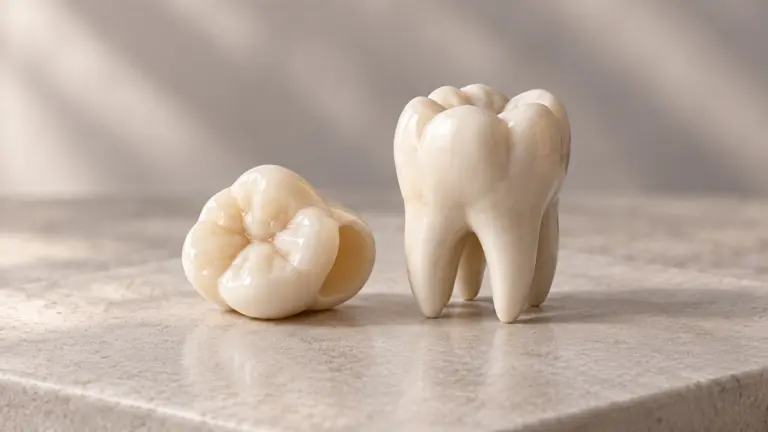
Root canal-treated tooth: is a crown always needed?
Root canal-treated tooth: when to consider a filling, inlay or crown. Remaining tooth structure, protection and check-ups for an individual choice here in Turin.
Frequently Asked Questions about Endodontics
Does the operating microscope improve the success of root canal treatment?
The microscope improves illumination and visibility of the operating field, helping identify details relevant to assessment and treatment. Outcomes also depend on the case and the technique used. The meta-analysis by Setzer and colleagues concerns endodontic surgery: its findings do not represent a success rate applicable to all root canal treatments or every retreatment.


attentive and always willing to explain every stage of treatment.
Show less
I began treatment with Dr Gianluca Buniato to straighten my teeth as an adult — I am 40 — and I can say it was one of the best decisions I could have made. Thanks to a carefully planned course of orthodontic treatment lasting less than two years, I achieved results I would never have thought possible: my smile has changed completely and I finally feel confident showing it!
Dr Buniato is extremely precise, attentive and always willing to explain every stage of treatment. The entire team is also kind, welcoming and very well organised. The practice, on Corso Francia in Turin, is carefully designed down to the smallest detail and immediately gives you a sense of trust and calm.
Although I live quite far from the practice, the excellent reviews persuaded me to put my trust in the doctor, and I can confirm that it was the right choice.
I absolutely recommend this practice to anyone who wants to improve their smile with professionalism, technology and plenty of personal attention.
Is root canal treatment painful?
Treatment is performed under local anaesthesia, adapted to the clinical situation. Pain or sensitivity may occur after the appointment, with varying intensity and duration. The review by Pak and White describes an average reduction in pain after treatment, without guaranteeing the same recovery for everyone. Instructions and any follow-up assessments are agreed for the individual case.

although I am quite afraid of the dentist, I feel calm with him.
Show less
I have known the Buniato dental practice for several years, after various experiences at other practices! I have always had a good experience: the doctor and his colleagues are knowledgeable, kind and precise. He has always advised me tactfully but professionally, and I must say that, although I am quite afraid of the dentist, I feel calm with him. He works with great attention to patients’ needs. Thank you again. Elisabetta
Is it better to save the tooth with endodontics or extract and place an implant?
We favour preserving the tooth when it offers a reasonable clinical outlook. The decision considers the remaining tooth structure, any fractures, the condition of the supporting tissues, restorative options and prognosis. When retaining the tooth is not indicated, the alternatives are explained. Studies of different options use criteria that are not always comparable: an overall percentage does not determine an individual's care pathway.

He explains what he is doing and what you may feel before each step
Show less
I’m writing a little more than I usually would because I know how difficult it can be to find a dentist you genuinely feel comfortable with — especially when you are looking for treatment abroad. I came to Turin for dental treatment and honestly could not be happier that I found Dr. Buniato.
What impressed me from the beginning was how thorough and transparent everything was. He takes the time to do a proper assessment, with detailed images and analysis, and then explains clearly what is going on, what the different options are, which one he recommends and what each option would cost. You are never left in the dark or simply expected to trust that someone knows what is best for you. You understand what is being done, why it is being done and what to expect.
That same care continues throughout the treatment. He explains what he is doing and what you may feel before each step, so you are never caught by surprise. You can tell that he is incredibly precise and genuinely cares about getting every detail right.
And the result exceeded my expectations. I had virtually no pain afterwards, despite expecting quite the opposite. The work looks excellent, but even more importantly, it feels completely natural. After dental work, there is usually some adjustment period — you notice that something has changed, or your bite may feel different. With Dr. Buniato, I had none of that. Everything felt completely natural from the moment I left the chair.
I was also genuinely impressed by the technical standard of the practice. The equipment and technology are on a level I have rarely seen, and it is clear that they are used with real expertise rather than simply being there for show.
The whole team is warm, attentive and professional, and you get the feeling that they are willing to take the time needed to do things properly.
I would genuinely recommend Dr. Buniato to anyone looking for excellent dental care in Turin. I’m very happy I found him and will definitely be back for my future treatment.
What happens if a previous root canal treatment fails?
The causes of the problem and the possibilities for retaining the tooth are reassessed. When indicated, retreatment can address untreated canals or materials and obstructions within the canals, using instruments selected for the case. In selected situations, other options may be considered, including endodontic surgery. Possibilities, limitations and follow-up are discussed before the care pathway is defined.

From the start, the doctor was very helpful and courteous and clearly explained the work he would need to do.
Show less
I did not know Dr Buniato and found him through an internet search. My old bite splint had broken, and I was looking for a practice that used cutting-edge techniques to make a new one. From the start, the doctor was very helpful and courteous and clearly explained the work he would need to do. Once the splint had been made, we had to meet several times so that he could adjust it to fit my teeth as well as possible. Now I have a splint that does its job perfectly. Above all, I greatly appreciated his human warmth, helpfulness, courtesy, calm manner and ability to explain the various steps that would follow. The reception staff are excellent too. The practice is clean, modern and well cared for. What can I say: these days, a doctor like this is almost a rarity. So I recommend him and thank him sincerely.
Sources
- Setzer FC et al. J Endod. 2012. DOI: 10.1016/j.joen.2011.09.021. PMID: 22152611.
- Pak JG, White SN. J Endod. 2011. DOI: 10.1016/j.joen.2010.12.016. PMID: 21419285.
- Torabinejad M et al. J Prosthet Dent. 2007. DOI: 10.1016/S0022-3913(07)60102-4. PMID: 17936128.
- Plotino G et al. J Endod. 2007. DOI: 10.1016/j.joen.2006.10.008. PMID: 17258622.
Reserve your space
The first step towards your transformation.
Our Patient Care is at your disposal
To start your personalized journey, use our Patient Care, contact us by phone or email. We handle requests with the highest priority and discretion. In case of urgency, we recommend immediate telephone contact.
Opening Hours
Monday - Thursday: 08:30 - 19:00
Friday: 08:30 - 16:00
Saturday - Sunday: Closed
Direct Contacts
Practice phone: +39 011 437 3857
Email: reception@buniato.it
WhatsApp Patient Care (Info/Appointments): +39 342 509 6364
WhatsApp Medical Emergencies: +39 329 473 8155
Reviews and Official Profiles
If you prefer to check before contacting us, you can read the Google reviews or open the practice's official profile on AlfaDocs.
Address
Dental practice Dr. Buniato Gianluca Maria
Corso Francia 30, 10143 Turin (TO), Italy
In central Turin, within easy reach. The nearest metro stop is Principi d’Acaja, a few minutes from Porta Susa, Piazza Statuto and the Cit Turin neighbourhood.