Fear of the dentist affects a significant share of the adult population and is one of the main reasons for postponing dental care. It is not a whim: dental anxiety has its roots in past experiences, in the perception of loss of control and in the poor predictability of what will happen in the chair. Addressing it requires a method, not generic reassurance.
Why fear of the dentist is not a trivial problem
Those who experience dental anxiety know a precise mechanism: the memory of a negative experience — a painful treatment, hurried communication, the feeling of not being able to stop the session — becomes consolidated and conditions every subsequent visit. The result is avoidance: the check-up is postponed, pain is tolerated until it becomes unbearable, compromises are accepted that worsen the clinical situation.
This vicious circle has real consequences. Those who postpone care for years arrive at the practice with more complex conditions, which require longer and more elaborate treatments. Recognizing anxiety as a clinical fact — and not as a fault of the patient — is the starting point for breaking it. A closer look at what the first appointment concretely involves is available in our guide on what to expect from your first visit to Turin.
Communication and listening: the first clinical tool
Scientific literature identifies empathic and structured communication as one of the pillars for managing dental anxiety. A review published on Dentistry Journal in 2026 proposes a framework in ten operational components, including the specific management of anxiety through reassurance, simple language, visual aids and personalized coping strategies[1].
In daily practice, this translates into concrete actions. Before every clinical step, we explain what we will do, how long it will take and what the patient may feel. We use direct but non-alarming language. We agree on a signal — for example raising a hand — to stop the procedure at any time. These are measures that give the patient back control over the situation, a central element in reducing anxiety.
Active listening is not a courtesy gesture: it is a diagnostic tool. Understanding what generated the fear in a specific patient makes it possible to calibrate the approach individually, avoiding standard protocols that may prove inadequate.
Digital technology: less unknowns, less anxiety
A significant part of dental anxiety arises from unpredictability: not knowing what is happening, not seeing the problem, undergoing physically unpleasant steps without understanding why they are necessary. The advanced digital technology intervenes precisely on this front.
The 3Shape TRIOS intraoral scanner replaces traditional impressions — a step that many patients find particularly unpleasant — with a rapid, non-invasive scan. The Planmeca CBCT allows three-dimensional diagnostics that reduce clinical uncertainty and limit the need for additional exploratory procedures. The patient can see their own situation on the screen and understand the rationale behind every treatment choice.
Every technological step that makes the path more transparent and predictable concretely contributes to reducing anxiety. It's not about gadgets: it's about tools that transform an experience into a shared journey.
Relaxed times and environment: details that change the experience
An underestimated element in managing anxiety is time. A visit scheduled with adequate margins — without the pressure of the next appointment — allows the patient to settle in, ask questions and absorb the information received. In our practice, the first specialist visit is structured with dedicated time precisely for this reason: this is not reduced efficiency, but real clinical efficiency.
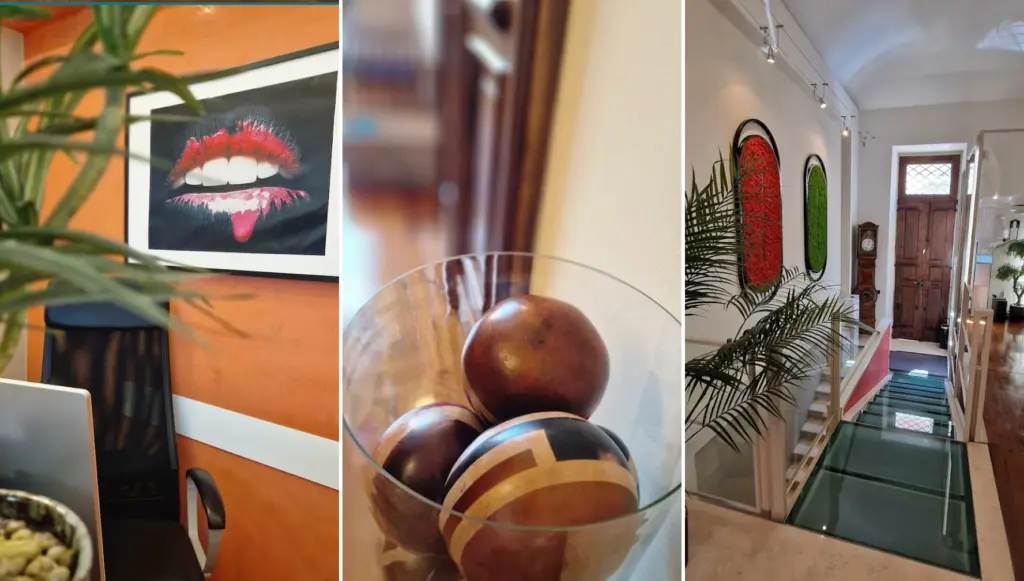
The setting in which the visit takes place also matters. An orderly environment, a preliminary explanation of the diagnostic pathway, the opportunity to ask questions without haste: these are elements that build trust even before touching an instrument. For those with negative experiences behind them, knowing that the approach will be gradual and agreed upon makes the difference between showing up and postponing yet again.
A journey, not a session
Managing fear of the dentist doesn't mean solving everything in one appointment. For those who have years of avoidance behind them, the path may require an initial phase dedicated exclusively to mutual understanding, medical history collection and the construction of a shared plan. Only after this phase do we proceed with the treatments, following an agreed sequence and respecting the patient's time.
This approach is not slow: it is realistic. A patient who trusts their clinician cooperates actively, tolerates procedures with greater calm and maintains continuity of care over time. The long-term clinical result is significantly better than fragmented interventions dictated by urgency.
Frequently asked questions
Is fear of the dentist normal in adults?
Yes. Dental anxiety is widespread in the adult population and has nothing to do with a lack of willpower. It is often linked to negative past experiences or to the perception of loss of control during procedures. Recognizing it is the first step towards managing it effectively.


As someone with a strong dental phobia, facing a procedure of this scale was a real challenge for me, filled with anxiety and fear.
Show less
I express my deepest gratitude to Dr Buniato for the complex dental implant procedure he carried out with great professionalism and expertise. As someone with a strong dental phobia, facing a procedure of this scale was a real challenge for me, filled with anxiety and fear. Dr Buniato stood out not only for the high technical standard and precision of his work, but above all for the extraordinary patience and human sensitivity he showed at every stage of the process. Excellent staff and environment.
Can I ask to stop treatment at any time?
Absolutely. In our office, we always agree on a stop signal before starting any procedure. The patient has the right to interrupt the session when he deems it necessary, without the need for justification.

although I am quite afraid of the dentist, I feel calm with him.
Show less
I have known the Buniato dental practice for several years, after various experiences at other practices! I have always had a good experience: the doctor and his colleagues are knowledgeable, kind and precise. He has always advised me tactfully but professionally, and I must say that, although I am quite afraid of the dentist, I feel calm with him. He works with great attention to patients’ needs. Thank you again. Elisabetta
How long does the first visit last for an anxious patient?
The first visit is structured with unhurried timing, without the pressure of a tight schedule. The actual duration depends on individual needs: the goal is not to complete a checklist, but to build a relationship of trust and gather all the information needed for a shared treatment plan.

The entire team is also kind, welcoming and very well organised.
Show less
I began treatment with Dr Gianluca Buniato to straighten my teeth as an adult — I am 40 — and I can say it was one of the best decisions I could have made. Thanks to a carefully planned course of orthodontic treatment lasting less than two years, I achieved results I would never have thought possible: my smile has changed completely and I finally feel confident showing it!
Dr Buniato is extremely precise, attentive and always willing to explain every stage of treatment. The entire team is also kind, welcoming and very well organised. The practice, on Corso Francia in Turin, is carefully designed down to the smallest detail and immediately gives you a sense of trust and calm.
Although I live quite far from the practice, the excellent reviews persuaded me to put my trust in the doctor, and I can confirm that it was the right choice.
I absolutely recommend this practice to anyone who wants to improve their smile with professionalism, technology and plenty of personal attention.
Does digital technology really help reduce anxiety?
Yes, in a concrete way. The intraoral scanner eliminates traditional impressions, 3D diagnostics make the clinical situation visible and reduce exploratory procedures. Every step that increases transparency and predictability helps reduce the anxious component of the dental experience.

Both in preparation and during procedures, he puts the patient at ease and looks after their wellbeing.
Show less
Dr Buniato is a serious professional who pays meticulous attention to the details of procedures and to the treatment plan agreed with the client. Both in preparation and during procedures, he puts the patient at ease and looks after their wellbeing. The assistants are also very professional and friendly, and overall they ensure a relaxed atmosphere in the practice. I highly recommend Dr Buniato to anyone looking for a serious, professional dentist who puts the patient’s wellbeing at the centre of every visit.
For a personalized assessment of your case, Dr. Buniato is available for an initial specialist visit with complete diagnostic analysis.
Sources
- Ho JCY, Hui JCY, Chai HH, Huang MZ, Lo ECM, Chu CH. Transforming Dental Care Through Empathetic and Clear Communication: A Comprehensive Review and Implementation Framework. Dent J. 2026;14(2):111. PubMed