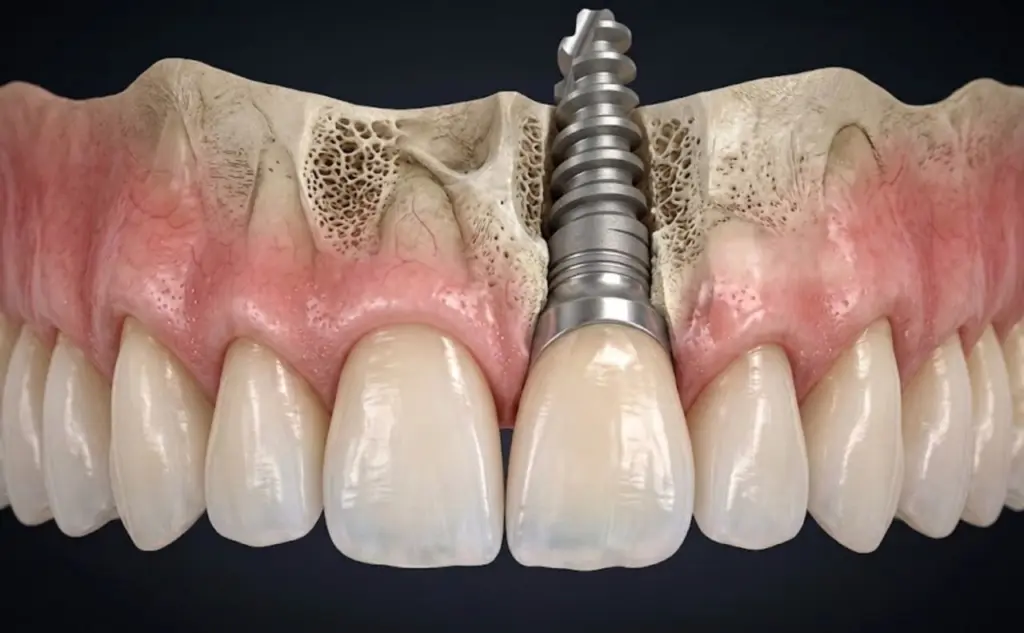
Immediate loading allows a fixed prosthesis to be positioned on the implants within 24-48 hours of surgery, but it is not a solution suitable for all cases. The difference between a predictable result and an early failure depends on the clinical selection: primary stability of the implant, quantity and quality of the available bone, general health status and patient habits.
For whom immediate loading is indicated
Immediate loading is aimed at patients who have lost or are about to lose teeth and wish to minimize the period without a fixed prosthesis. The typical profile includes:
- Patients with total or partial edentulism who require complete rehabilitation
- People with sufficient bone volume in the intended implant sites
- Those with general health conditions compatible with implant surgery
- Patients motivated to follow a rigorous maintenance protocol in the following months
Scientific literature confirms that, in correctly selected cases, immediate loading achieves implant survival rates comparable to the conventional protocol with deferred loading (1, 2). But the key word remains correctly selected.
When immediate loading is not indicated
Not all clinical situations allow loading the implants the same day. The main contraindications include:
- Insufficient primary stability. If the implant does not reach an adequate insertion torque at the time of positioning, immediate loading increases the risk of micromovements and failure of osseointegration.
- Significant bone deficits. When bone volume requires concurrent regenerative procedures — such as a maxillary sinus lift — the deferred protocol offers greater predictability.
- Severe uncontrolled parafunctions. Intense bruxism or clenching habits can compromise the stability of the temporary prosthesis in the first critical weeks.
- Uncompensated systemic conditions. Uncontrolled diabetes, therapies that affect bone metabolism, or conditions that slow healing require case-by-case evaluation.
- Unrealistic expectations. Immediate loading provides a functional temporary prosthesis, not the definitive result. The transition to the final prosthesis occurs after complete osseointegration, generally in 3-6 months.
In these situations, proposing immediate loading anyway to reduce the time exposes the patient to an avoidable risk. A clinician who carefully evaluates when not proceeding is protecting the long-term outcome.
How to decide: the diagnostic process
The decision about immediate loading is not based on a panoramic radiograph alone. It requires a structured diagnostic process:
- Three-dimensional CBCT. The cone beam computed tomography allows you to precisely evaluate the residual bone volume, the density in the implant sites and the anatomical relationships with noble structures such as the inferior alveolar nerve and the floor of the maxillary sinus.
- Digital case planning. The implant positions are defined before the operation, taking into account the distribution of the prosthetic loads and the biomechanics of the future rehabilitation.
- Intraoperative assessment of stability. At the time of insertion, insertion torque and primary stability are measured to confirm or modify the plan. If the values do not reach the safety threshold, we switch to the deferred protocol.
- Choice of implant components. The quality of the implant system affects the predictability of the result. Not all systems are designed to withstand the immediate load with the same reliability.
This approach, described in the literature as integrated surgical-prosthetic planning (1, 3), reduces the margin of error and allows clinical decisions to be made based on data, not on promises of speed.
What risks does an accurate assessment reduce
The main risk of poorly indicated immediate loading is the early failure of the implant: the bone does not integrate with the implant surface and the implant becomes mobile. When this happens, the patient loses time, undergoes a second operation and often finds himself with less bone available than in the initial situation.
An accurate assessment specifically reduces:
- The risk of failure due to overload. Loading an implant that does not have sufficient primary stability means compromising osseointegration in the first weeks, the most critical period.
- The risk of early prosthetic complications. A temporary prosthesis designed without considering load distribution can fracture or dislocate, creating both functional and psychological problems.
- The risk of having to start from scratch. A failed implant during immediate loading may result in the need for bone regeneration before a second attempt, extending the overall times well beyond those of a conventional protocol.
In other words: the rush to have fixed teeth that same day, when conditions do not allow it, can turn into a longer and more complex process than the one you wanted to avoid.
What to expect during treatment
When immediate loading is indicated and is performed with a rigorous protocol, the typical path is divided into well-defined phases:
Phase 1: diagnosis and planning (1-2 weeks)
First specialist visit with medical history collection, CBCT, possible intraoral scan and discussion of the treatment plan. In this phase it is defined whether the immediate load is actually feasible for the specific case.
Phase 2: surgery and immediate prosthesis (day of surgery)
Positioning of the implants and, if primary stability allows, delivery of the fixed temporary prosthesis within 24-48 hours. This prosthesis is functional but not definitive: it has a shape and resistance calibrated for the period of osseointegration.
Phase 3: osseointegration (3-6 months)
Period in which the bone progressively integrates with the surface of the implants. During this phase the patient wears the temporary prosthesis, follows an adequate diet and undergoes scheduled checks.
Phase 4: definitive prosthesis
Once the osseointegration is completed, we proceed with the definitive impressions and the creation of the final prosthesis. This phase is the one that determines the long-term aesthetic and functional result.
It is important to understand that the day of the operation is not the end of the journey, but the beginning. The temporary prosthesis is a clinical tool, not the final result.
How the result is maintained over time
An immediately loaded implant, once osseointegrated and definitively prosthesized, has the same maintenance requirements as any implant rehabilitation:
- Rigorous home hygiene. Peri-implantitis — the inflammation of the tissues around the implant — is the main cause of late failure and can be prevented with constant and correct hygiene.
- Periodic professional checks. Professional hygiene sessions and x-ray checks at intervals established by the clinician allow any problems to be detected early.
- Management of parafunctions. If present, bruxism and clenching should be managed with night protection devices to reduce mechanical stress on the implants and prosthesis.
Long-term success depends both on the quality of the intervention and on the consistency of maintenance. A well-positioned and never checked implant has a worse prognosis than an implant in less favorable initial conditions but followed rigorously.
Immediate load and deferred load: it is not a question of superiority
One of the most widespread misunderstandings is that immediate loading is an evolved or superior version of the conventional protocol. It's not. They are two clinical strategies with different indications:
- Immediate loading is indicated when the biological and biomechanical conditions allow it and the patient derives a real benefit from the immediate placement of a prosthesis.
- Delayed loading remains the reference protocol when primary stability is not optimal, when concurrent regenerative procedures are necessary or when the risk-benefit ratio does not favour the immediate placement of a prosthesis.
The choice between the two protocols should never be guided by marketing or time pressure, but by an objective clinical evaluation. As highlighted by the literature, integrated surgical-prosthetic planning is what makes the result predictable, regardless of the protocol chosen (1, 3).
The role of technology in predictability
The advanced diagnostic technology does not automatically make the result better, but reduces the margin of uncertainty in the decision-making phase. In the context of immediate loading, tools that impact predictability include:
- CBCT Planmeca for the three-dimensional evaluation of bone volume and anatomical relationships
- Digital intraoral scan for pre-surgical prosthetic design
- Implant planning software to define the position, angle and depth of the implants before surgery
These tools are useful to the extent that they are used within solid clinical reasoning. Technology supports the decision, not replaces it.
Frequently asked questions
Is immediate loading suitable for everyone?
No. It requires specific conditions: sufficient bone volume and density, primary stability of the implant at the time of insertion and absence of uncontrolled risk factors. The evaluation takes place on a case-by-case basis through a structured diagnostic process.


attentive and always willing to explain every stage of treatment.
Show less
I began treatment with Dr Gianluca Buniato to straighten my teeth as an adult — I am 40 — and I can say it was one of the best decisions I could have made. Thanks to a carefully planned course of orthodontic treatment lasting less than two years, I achieved results I would never have thought possible: my smile has changed completely and I finally feel confident showing it!
Dr Buniato is extremely precise, attentive and always willing to explain every stage of treatment. The entire team is also kind, welcoming and very well organised. The practice, on Corso Francia in Turin, is carefully designed down to the smallest detail and immediately gives you a sense of trust and calm.
Although I live quite far from the practice, the excellent reviews persuaded me to put my trust in the doctor, and I can confirm that it was the right choice.
I absolutely recommend this practice to anyone who wants to improve their smile with professionalism, technology and plenty of personal attention.
How long does the immediate loading operation last?
The duration depends on the number of implants and the complexity of the case. For a complete rehabilitation of an arch, the surgery generally lasts a few hours. The temporary prosthesis is delivered within 24-48 hours.

The procedures were planned in advance according to the patient’s actual needs
Show less
A dental practice with cutting-edge technology and highly professional staff. The procedures were planned in advance according to the patient’s actual needs and carried out perfectly. Both organisationally and medically, it is undoubtedly among the best dental practices in Turin. Many thanks to Dr Buniato and all the wonderful staff at the practice!
Is the prosthesis delivered on the same day the definitive one?
No. It is a functional temporary prosthesis, designed for the osseointegration period. The definitive prosthesis is created after 3-6 months, once the integration of the implants in the bone has been confirmed.

From the start, the doctor was very helpful and courteous and clearly explained the work he would need to do.
Show less
I did not know Dr Buniato and found him through an internet search. My old bite splint had broken, and I was looking for a practice that used cutting-edge techniques to make a new one. From the start, the doctor was very helpful and courteous and clearly explained the work he would need to do. Once the splint had been made, we had to meet several times so that he could adjust it to fit my teeth as well as possible. Now I have a splint that does its job perfectly. Above all, I greatly appreciated his human warmth, helpfulness, courtesy, calm manner and ability to explain the various steps that would follow. The reception staff are excellent too. The practice is clean, modern and well cared for. What can I say: these days, a doctor like this is almost a rarity. So I recommend him and thank him sincerely.
What happens if primary stability is not sufficient?
The plan is adapted intraoperatively. If the stability values do not reach the necessary threshold, we proceed with the deferred protocol: the implants are left to heal submerged or with a temporary removable prosthesis, and the fixed prosthesis takes place after complete osseointegration.

From the very first appointment, I was impressed by the care and clarity with which solutions were proposed to me
Show less
I contacted Dr Gianluca Buniato’s dental practice for advice and a possible estimate to address my many complex dental problems. From the very first appointment, I was impressed by the care and clarity with which solutions were proposed to me, and I was soon able to see how effective they were. I feel I should thank Dr Buniato and his team not only for the professionalism with which they work in a dental practice using excellent technology, at very reasonable prices, but also for their ability to put patients at ease at all times.
Does immediate loading cost more than the traditional protocol?
The overall path includes additional components - the temporary prosthesis, the advanced pre-surgical planning - which can impact the overall investment. The economic evaluation must always be contextualized with respect to the individual treatment plan.

He explains what he is doing and what you may feel before each step
Show less
I’m writing a little more than I usually would because I know how difficult it can be to find a dentist you genuinely feel comfortable with — especially when you are looking for treatment abroad. I came to Turin for dental treatment and honestly could not be happier that I found Dr. Buniato.
What impressed me from the beginning was how thorough and transparent everything was. He takes the time to do a proper assessment, with detailed images and analysis, and then explains clearly what is going on, what the different options are, which one he recommends and what each option would cost. You are never left in the dark or simply expected to trust that someone knows what is best for you. You understand what is being done, why it is being done and what to expect.
That same care continues throughout the treatment. He explains what he is doing and what you may feel before each step, so you are never caught by surprise. You can tell that he is incredibly precise and genuinely cares about getting every detail right.
And the result exceeded my expectations. I had virtually no pain afterwards, despite expecting quite the opposite. The work looks excellent, but even more importantly, it feels completely natural. After dental work, there is usually some adjustment period — you notice that something has changed, or your bite may feel different. With Dr. Buniato, I had none of that. Everything felt completely natural from the moment I left the chair.
I was also genuinely impressed by the technical standard of the practice. The equipment and technology are on a level I have rarely seen, and it is clear that they are used with real expertise rather than simply being there for show.
The whole team is warm, attentive and professional, and you get the feeling that they are willing to take the time needed to do things properly.
I would genuinely recommend Dr. Buniato to anyone looking for excellent dental care in Turin. I’m very happy I found him and will definitely be back for my future treatment.
Can I eat normally immediately after surgery?
In the first few weeks it is necessary to follow a soft diet so as not to subject the implants to excessive loads during the initial healing phase. Specific indications are provided by the clinician based on the case.

The dentists are professional and attentive to each patient’s particular sensitivities.
Show less
The practice has a very welcoming waiting room, and all the rooms are bright and clean. The staff are professional, and the reception team is well organised when it comes to information, appointments and email reminders for them. The dentists are professional and attentive to each patient’s particular sensitivities. In conclusion, I am fully satisfied with the treatment and the result achieved.
How long do immediate loading implants last?
Once osseointegration is complete, immediate loading implants have the same long-term prognosis as deferred loading implants. The duration depends on the quality of maintenance, oral hygiene and periodic checks.

He works with great attention to patients’ needs.
Show less
I have known the Buniato dental practice for several years, after various experiences at other practices! I have always had a good experience: the doctor and his colleagues are knowledgeable, kind and precise. He has always advised me tactfully but professionally, and I must say that, although I am quite afraid of the dentist, I feel calm with him. He works with great attention to patients’ needs. Thank you again. Elisabetta
For a personalized evaluation of your case, Dr. Buniato is available for one first specialist visit with complete diagnostic analysis.
Buniato Dental Practice - Smile Architecture
Corso Francia 30, Turin (Princi d'Acaja metro)
Tel. 011 437 3857 · Book online
Sources
- Bedrossian E. Full Mouth Reconstruction with Dental Implants: Planning, Surgical, and Prosthetic Phase. Dental Clinics of North America. 2025. doi:10.1016/j.cden.2024.11.007. PubMed
- Morton D. Immediate restoration and loading of dental implants: clinical considerations and protocols. The International Journal of Oral & Maxillofacial Implants. 2004. PubMed
- Norré D. STAR concept: A technique to improve the predictability of immediate implant placement and loading in edentulous arches. International Journal of Computerized Dentistry. 2022. doi:10.3290/j.ijcd.b3380919. PubMed