Healing times after a dental implant in Turin vary from 2 to 6 months, depending on the bone quality, the surgical protocol and the type of prosthetic rehabilitation. At Studio Buniato in Corso Francia 30, three-dimensional planning on CBCT and the use of Nobel Biocare implants with 20-year clinical documentation allow you to define times and expectations precisely before you even start.
Why do some implants last thirty years and others fail in three?
The answer is not in the material — almost all implants today are made of grade 4 or 5 titanium. The answer is in the decision chain which precedes, accompanies and follows the intervention.
It all starts with diagnostics. A panoramic x-ray shows two-dimensional shadows. A CBCT volumetric tomography shows the bone in three dimensions: thickness, density, relationship with the inferior alveolar nerve, proximity to the maxillary sinus. The difference between the two is the difference between guessing and knowing. Buser data, collected over more than twenty years of follow-up, demonstrate that implants planned with rigorous protocols achieve survival rates of 98.8% at 10 years. But that number presupposes planning that starts from choosing the right implant for that bone, not for that catalog.
And then there is the factor that no technology can replace: the surgical experience of those who interpret those images and translate the planning into an operational gesture.
Guided, flapless, open flap surgery: how do you decide?
Computer-guided surgery receives a lot of media attention. Tahmaseb data documents an average deviation of 1.2 mm at the entry point and 1.4 mm at the apex — an excellent result. But presenting it as the only modern option is a dangerous simplification.
In daily clinical practice, the surgeon chooses between multiple approaches based on the specific situation. The guided is ideal in complex rehabilitations - total edentulism, multiple positionings, critical anatomies. The open flap approach offers direct vision of the tissues, which is fundamental when simultaneous bone regeneration is needed. The flapless technique reduces surgical trauma but requires abundant and predictable bone volume.
True competence is not mastering a technique. It's knowing which one to choose, case by case, and having the training to do them all. A path that passes through international reference centers - Zurich, Vienna, Dubai - where each approach is refined on different cases, in different hands, with different philosophies that ultimately converge in a single principle: the best solution for that patient.
When the bone is not there: regeneration and augmentation of the maxillary sinus
“There is not enough bone for an implant” is a phrase that many patients have heard. And it's true — in that moment, for that approach. But insufficiency does not mean impossibility. It means that the route requires an extra step.
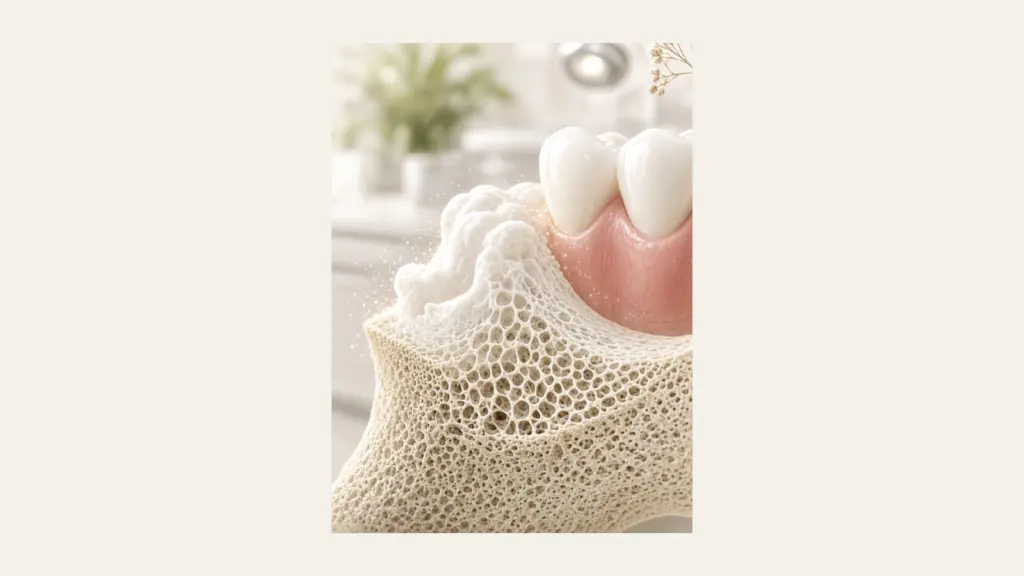
Guided bone regeneration (GBR) uses membranes and biomaterials to reconstruct lost bone volume. Aghaloo and Moy's data document implant survival rates in regenerated bone above 95% — comparable to those in native bone. The maxillary sinus lift, analyzed by Del Fabbro on over 6,500 implants, confirms similar percentages.
These are interventions that require dedicated surgical training, biomaterials of controlled and certified origin, and a three-dimensional diagnostics that quantifies the defect before choosing the strategy. The choice between autologous, heterologous, Khoury or split crest technique depends on the morphology of the defect, not on the operator's preference. Every case has its solution — as long as you have the tools to see it.
Same-day fixed teeth: immediate loading, promises and reality
Immediate loading — implants and temporary prosthesis in the same session — is scientifically documented. Esposito's Cochrane review confirms that, in selected cases, the results are equivalent to traditional deferred loading.
The key word is selected. Precise conditions are needed: insertion torque greater than 35 Ncm, adequate bone quality, defined prosthetic plan before the intervention. Immediate loading is not a shortcut — it is a protocol that paradoxically requires more planning than the traditional one. Facial scanning with Facescan technology allows you to design the position of the implants starting from the desired aesthetic result, reversing the conventional surgical logic.
Anyone who promises fixed teeth on the same day to everyone, without distinction, is simplifying. In clinical reality, the decision between immediate and deferred is made on objective data - bone density, position, type of rehabilitation - and is communicated to the patient transparently, before any intervention.
Implant-supported prosthetics: the moment when precision becomes visible
An implant is an invisible pillar under the gum. What the patient sees — and what determines the perceived quality — is the prosthesis. And this is where the difference between a functional result and an excellent one becomes tangible.
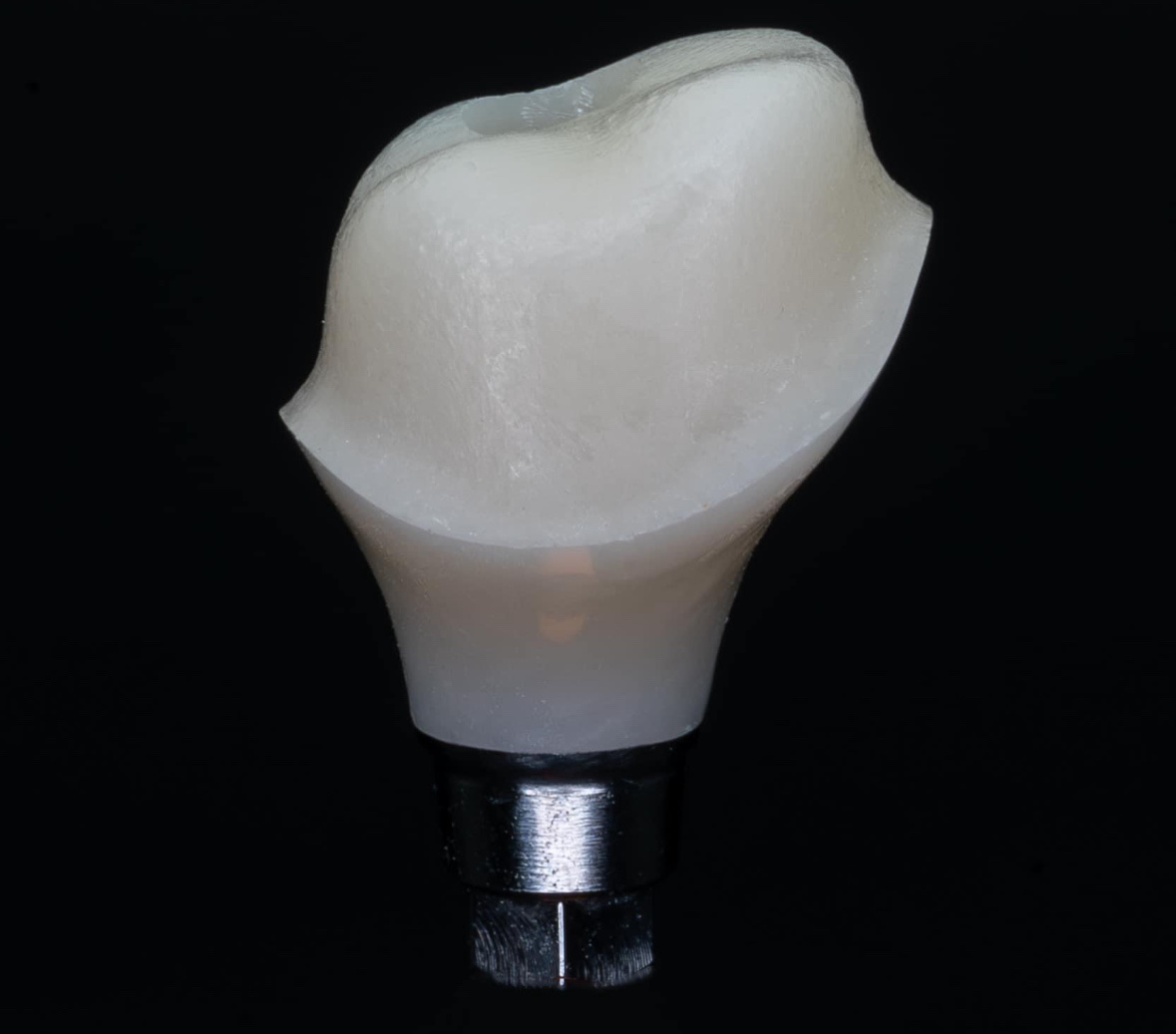
Layered zirconia, processed with reference CAD/CAM systems, offers mechanical resistance and aesthetic performance in the posterior sectors. The feldspathic ceramic, modeled by hand layer after layer, achieves a translucency that no industrial material can replicate — and is the material of choice for the anterior sector, where every nuance counts (in-depth analysis: feldspathic ceramic veneers). Lithium disilicate falls in an intermediate position, with excellent optical properties and flexural strength.
The choice is not interchangeable. It depends on the position, occlusal forces, gingival biotype and expectations. It is a three-way conversation - clinician, patient and ceramist - which starts from a precision digital impression and arrives at a tailor-made restoration. Different every time, because every mouth is different.
After the implant: the follow-up that no one talks about
Most of the content on implantology stops at the intervention. But the literature is clear: implant longevity depends as much on maintenance as on surgery. Pjetursson documents that 20-year survival rates drop significantly without a dedicated hygiene protocol.
Implant follow-up is not a simple "annual check-up". It is a structured protocol: professional hygiene with specific instruments for implant surfaces, radiographic monitoring of the peri-implant bone level, evaluation of soft tissues, early detection of mucositis or peri-implantitis. Each maintenance visit is documented - with clinical photography and periodontal probing measurements - to have a historical series that allows you to capture minimal variations before they become problems.
An implant is not an isolated surgical procedure. It is the beginning of a clinical relationship that lasts decades. And the quality of that relationship — the attention to detail, the continuity of the relationship between patient and clinician — is what separates an implant that lasts ten years from one that lasts thirty.
Frequently Asked Questions about Dental Implants in Turin
How long does a dental implant last?
The most solid scientific data documents survival rates greater than 95% at 10 years and 93% at 20 years (Pjetursson, Clinical Oral Implants Research). At the Buniato Dental Practice in Turin, each Nobel Biocare implant is planned on Planmeca VISO g3 CBCT and included in a personalized follow-up program with dedicated professional hygiene.


The dentists are professional and attentive to each patient’s particular sensitivities.
Show less
The practice has a very welcoming waiting room, and all the rooms are bright and clean. The staff are professional, and the reception team is well organised when it comes to information, appointments and email reminders for them. The dentists are professional and attentive to each patient’s particular sensitivities. In conclusion, I am fully satisfied with the treatment and the result achieved.
Is it possible to insert implants when the bone is insufficient?
Yes. Guided bone regeneration (GBR) and sinus lift allow the necessary volume to be reconstructed with success rates above 95% (Aghaloo & Moy). Dr. Buniato performs advanced regenerative interventions with Osteobiol biomaterials and dermal matrix, planned on three-dimensional diagnostics.

From the start, the doctor was very helpful and courteous and clearly explained the work he would need to do.
Show less
I did not know Dr Buniato and found him through an internet search. My old bite splint had broken, and I was looking for a practice that used cutting-edge techniques to make a new one. From the start, the doctor was very helpful and courteous and clearly explained the work he would need to do. Once the splint had been made, we had to meet several times so that he could adjust it to fit my teeth as well as possible. Now I have a splint that does its job perfectly. Above all, I greatly appreciated his human warmth, helpfulness, courtesy, calm manner and ability to explain the various steps that would follow. The reception staff are excellent too. The practice is clean, modern and well cared for. What can I say: these days, a doctor like this is almost a rarity. So I recommend him and thank him sincerely.
Is immediate loading always possible?
No. Immediate loading is indicated when primary stability is adequate (torque ≥35 Ncm) and the prosthetic plan has been completed before surgery. At Studio Buniato in Turin, planning takes place with 3D CBCT, 3Shape TRIOS 6 scanner and Facescan to integrate aesthetics and function from the first phase.

From the very first appointment, I was impressed by the care and clarity with which solutions were proposed to me
Show less
I contacted Dr Gianluca Buniato’s dental practice for advice and a possible estimate to address my many complex dental problems. From the very first appointment, I was impressed by the care and clarity with which solutions were proposed to me, and I was soon able to see how effective they were. I feel I should thank Dr Buniato and his team not only for the professionalism with which they work in a dental practice using excellent technology, at very reasonable prices, but also for their ability to put patients at ease at all times.
What material is used for the implant crown?
It depends on the case. Studio Buniato uses Nobel Procera layered zirconia for the posterior sectors, feldspar ceramic for anterior aesthetics and lithium disilicate as an intermediate solution. Each product is tailor-made in collaboration with an excellent dental laboratory.

He explains what he is doing and what you may feel before each step
Show less
I’m writing a little more than I usually would because I know how difficult it can be to find a dentist you genuinely feel comfortable with — especially when you are looking for treatment abroad. I came to Turin for dental treatment and honestly could not be happier that I found Dr. Buniato.
What impressed me from the beginning was how thorough and transparent everything was. He takes the time to do a proper assessment, with detailed images and analysis, and then explains clearly what is going on, what the different options are, which one he recommends and what each option would cost. You are never left in the dark or simply expected to trust that someone knows what is best for you. You understand what is being done, why it is being done and what to expect.
That same care continues throughout the treatment. He explains what he is doing and what you may feel before each step, so you are never caught by surprise. You can tell that he is incredibly precise and genuinely cares about getting every detail right.
And the result exceeded my expectations. I had virtually no pain afterwards, despite expecting quite the opposite. The work looks excellent, but even more importantly, it feels completely natural. After dental work, there is usually some adjustment period — you notice that something has changed, or your bite may feel different. With Dr. Buniato, I had none of that. Everything felt completely natural from the moment I left the chair.
I was also genuinely impressed by the technical standard of the practice. The equipment and technology are on a level I have rarely seen, and it is clear that they are used with real expertise rather than simply being there for show.
The whole team is warm, attentive and professional, and you get the feeling that they are willing to take the time needed to do things properly.
I would genuinely recommend Dr. Buniato to anyone looking for excellent dental care in Turin. I’m very happy I found him and will definitely be back for my future treatment.
How to choose an implantologist in Turin?
Evidence-based criteria include: documented international training, use of implant systems with long-term literature (Nobel Biocare has over 50 years of publications), 3D CBCT diagnostics, ability to manage regenerative complications, structured follow-up protocol. A first in-depth visit is the first indicator of the quality of a practice. For further information on all the criteria of excellence, consult our guide: What makes an excellent dentist.

All the staff at the practice are very friendly, attentive and punctual, and flexible when necessary.
Show less
All the staff at the practice are very friendly, attentive and punctual, and flexible when necessary. I am very satisfied with all the work Dr Buniato has done for me, including resolving a difficult problem with a crown that had been going on for years, with attention to appearance as well as function. Even my daughters, who are in their twenties, are happy to go to the dentist.
How can I contact Studio Buniato for an implant consultation?
To bring your clinical case to the attention of the Medical Director or to plan a confidential consultation, the management secretariat of the Buniato Dental Practice in Corso Francia 30 in Turin can be reached at 011 4373857 or via the portal prenota.alfadocs.com.
To evaluate how these protocols apply to your specific situation, you can request a confidential diagnostic interview with the Medical Director.

staff who are always available, including by phone.
Show less
A very clean dental practice, with staff who are always available, including by phone. My children are also delighted with Dr Buniato.
Sources
- Pjetursson BE, Thoma D, Jung R, Zwahlen M, Zembic A. “A systematic review of the survival and complication rates of implant-supported fixed dental prostheses after a mean observation period of at least 5 years.” Clinical Oral Implants Research, 2012;23 Suppl 6:22-38. DOI: 10.1111/j.1600-0501.2012.02546.x
- Buser D, Janner SF, Wittneben JG, Brägger U, Ramseier CA, Salvi GE. “10-year survival and success rates of 511 titanium implants with a sandblasted and acid-etched surface.” Clinical Implant Dentistry and Related Research, 2012;14(6):839-851. DOI: 10.1111/j.1708-8208.2012.00456.x (PMID: 22897683)
- Tahmaseb A, Wu V, Wismeijer D, Coucke W, Evans C. “The accuracy of static computer-aided implant surgery: a systematic review and meta-analysis.” Clinical Oral Implants Research, 2018;29 Suppl 16:416-435. DOI: 10.1111/clr.13301 (PMID: 30328191)
- Aghaloo TL, Moy PK. “Which hard tissue augmentation techniques are the most successful in furnishing bony support for implant placement?” International Journal of Oral & Maxillofacial Implants, 2007;22 Suppl:49-70.
- Del Fabbro M, Testori T, Francetti L, Weinstein R. “Systematic review of survival rates for implants placed in the grafted maxillary sinus.” Journal of Dental Research, 2004;83 Spec No C:C47-51.
- Esposito M, Grusovin MG, Maghaireh H, Worthington HV. “Interventions for replacing missing teeth: different times for loading dental implants.” Cochrane Database of Systematic Reviews, 2013;(3):CD003878. DOI: 10.1002/14651858.CD003878.pub5