Retention is part of orthodontic care and serves to maintain the position the teeth have reached. The appliance, instructions for use and check-ups are determined for each individual case. For those who travel or live far from the practice, arranging maintenance and contact details in advance helps manage unexpected problems without neglecting continuity of care.
Treatment does not end when alignment is complete
The end of the active phase does not mean that the position of the teeth will remain unchanged on its own. Teeth can move after treatment and throughout life. Retention is therefore discussed as part of the plan, with instructions that may apply over a long period and require review over time.
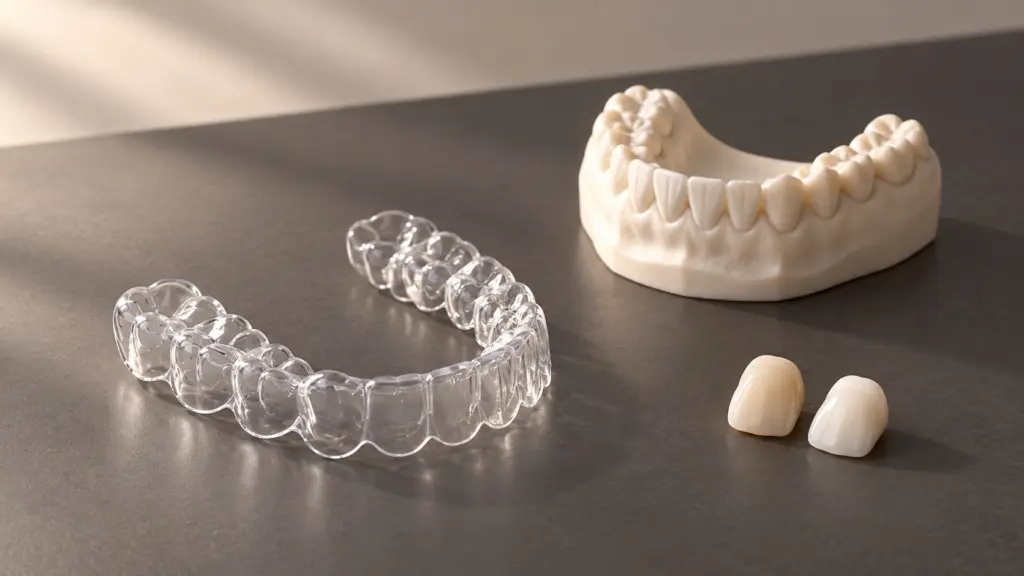
A retainer has a different function from an active aligner. It is not advisable to decide on your own which one to wear or to retrieve an old tray to correct a change. If the position seems different, it is necessary to understand what has happened before applying new forces to the teeth.
At the end of adult orthodontic treatment it is helpful to receive clear instructions: which appliance to use, what personal schedule to follow, how to clean it and when to have it checked. Keeping this information allows you to report it accurately even if your daily arrangements have changed in the meantime.
Fixed and removable retention: different requirements
A fixed retainer is attached to the teeth and requires attention to its integrity and hygiene. A removable retainer is taken out and worn according to the instructions received; its effectiveness also depends on using it as agreed. In some situations, the plan may involve different appliances or a combination of solutions.
The available Cochrane review identifies limitations and uncertainties in the evidence comparing retention strategies. No single solution emerges as universally best for every patient. The appliance should be chosen with consideration for the treatment carried out, the condition of the mouth, hygiene and the ability to follow instructions. This review concerns treatment with fixed braces and excludes studies involving aligners; it therefore does not allow all cases to be automatically considered equivalent.
A fixed retainer should not be regarded as a system that no longer requires check-ups. A removable one, in turn, should not be used according to a schedule borrowed from someone else. Individual instructions matter more than an abstract preference for the apparently more convenient solution.
What to assess at maintenance check-ups
During a check-up, the position of the teeth, the fit of the appliance and any problems with integrity or hygiene are assessed. The presence of a wire or tray does not replace an examination of the teeth and gums. For this reason, orthodontic maintenance should be coordinated with routine dental check-ups.
It is helpful to bring the removable appliance even when it seems to be working well. A change may become apparent through comparison with the previous situation, while the patient may report unusual pressure, difficulty inserting it or areas that cause irritation. These details help determine whether intervention or a change to the schedule is needed.
The hygiene and maintenance are adapted to the spaces and appliances present. Any new fillings or restorations may also make it necessary to check the fit of the retainer again. Informing the clinician carrying out treatment that a retainer is present prevents two aspects of the same course of care from being considered separately.
Preparing for a trip without changing the prescribed instructions
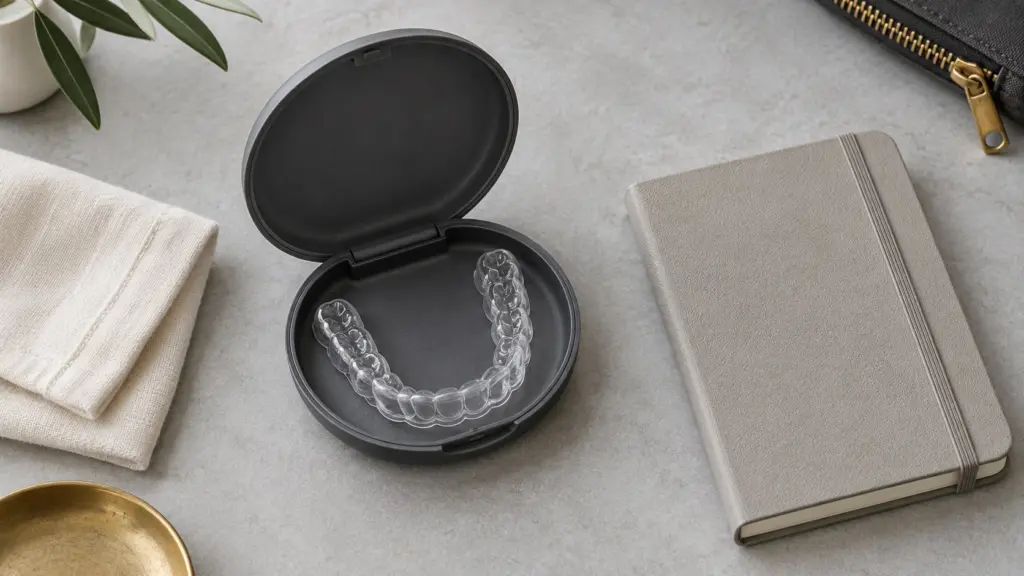
Before a trip, it is helpful to check where to store the appliance, have the designated case available and know the recommended cleaning methods. Wrapping it in a tissue or leaving it loose in a bag makes it easier to lose or damage. Instructions relating to the material must also be followed when away from home.
If the trip coincides with an already scheduled check-up, it is advisable to discuss this with the practice beforehand. The appointment can be arranged with your personal schedule in mind, but the clinical need for the check-up does not disappear because reaching Turin is less convenient. Any practical arrangements should be agreed upon, without independently extending the intervals.
For patients travelling from Switzerland or other locations, it is helpful to clarify how to contact the practice and what information to send if a problem arises. An organised description can help assess the priority of the appointment; however, photographs and messages do not guarantee a complete diagnosis or the ability to resolve everything remotely.
If the appliance breaks, is lost or will not fit
The first recommendation is to contact the clinician overseeing your care, explaining what has changed and when. You should not automatically wait until the next check-up, especially if you notice movement or detachment. How promptly action is needed depends on the situation: the practice assesses how to organise care.
A tray that no longer fits should not be forced, heated or altered to make it fit. A detached or distorted wire also requires assessment; gluing or bending it yourself can cause further problems. It is preferable to keep the appliance and follow the instructions received for the specific incident.
When you are far away, making contact can help establish whether you need to see a nearby dentist or arrange a return to the practice. There is no number of days without retention that is safe for everyone. The decision depends on the treatment, the appliance and the changes observed, not solely on the length of the trip.
A well-organised course of care therefore also plans for what comes afterwards: understandable instructions, check-ups and someone to contact with questions. Convenience comes from knowing how to proceed in different situations, maintaining the same clinical criteria whether you are in Turin or elsewhere.
The patient information from the British Orthodontic Society provides a general reference for the course of orthodontic care. The instructions for your own retention remain those agreed upon after individual assessment.
Frequently asked questions
How long do you need to wear a retainer?
The schedule is determined individually and may continue for a long time. The tendency of teeth to change position does not automatically disappear when alignment is complete. It is not advisable to reduce or stop use based on someone else's experience: any changes are agreed upon during check-ups with the clinician overseeing treatment.


From the very first appointment, I was impressed by the care and clarity with which solutions were proposed to me
Show less
I contacted Dr Gianluca Buniato’s dental practice for advice and a possible estimate to address my many complex dental problems. From the very first appointment, I was impressed by the care and clarity with which solutions were proposed to me, and I was soon able to see how effective they were. I feel I should thank Dr Buniato and his team not only for the professionalism with which they work in a dental practice using excellent technology, at very reasonable prices, but also for their ability to put patients at ease at all times.
If the tray will not fit, can I use an old aligner?
Not without an assessment. An old aligner can exert forces and is not automatically equivalent to the prescribed retainer. It is better to report the change, keep the available appliances and follow the clinician's instructions. Forcing the tray or altering it at home does not clarify the cause of the problem.

attentive and always willing to explain every stage of treatment.
Show less
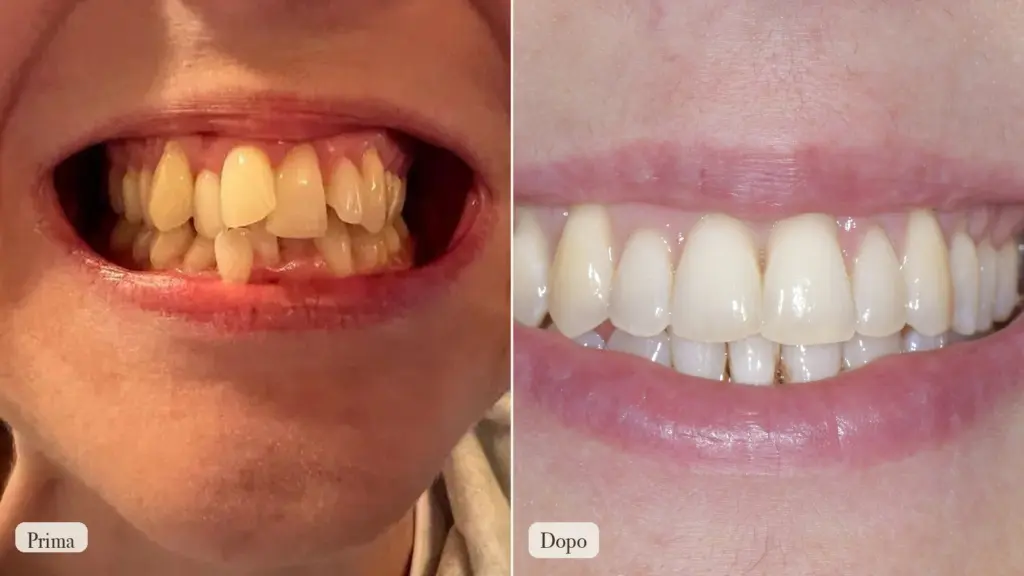
I began treatment with Dr Gianluca Buniato to straighten my teeth as an adult — I am 40 — and I can say it was one of the best decisions I could have made. Thanks to a carefully planned course of orthodontic treatment lasting less than two years, I achieved results I would never have thought possible: my smile has changed completely and I finally feel confident showing it!
Dr Buniato is extremely precise, attentive and always willing to explain every stage of treatment. The entire team is also kind, welcoming and very well organised. The practice, on Corso Francia in Turin, is carefully designed down to the smallest detail and immediately gives you a sense of trust and calm.
Although I live quite far from the practice, the excellent reviews persuaded me to put my trust in the doctor, and I can confirm that it was the right choice.
I absolutely recommend this practice to anyone who wants to improve their smile with professionalism, technology and plenty of personal attention.
If I lose my retainer while travelling, can I wait until I return?
It is advisable to contact the practice as soon as you notice the loss. There is no safe interval without an appliance that applies to everyone. Depending on the situation, the timing and arrangements for care will be assessed, including the possible need for a check-up near your current location, without deciding solely on the convenience of returning.

their kindness in welcoming patients and their helpfulness in arranging appointments.
Show less
Dr Buniato and his entire team stand out for their great professionalism and expertise, as well as for their kindness in welcoming patients and their helpfulness in arranging appointments. A dental practice I absolutely recommend!!
For a personalised assessment of your case, Dr Buniato is available for an initial dental consultation with a complete diagnostic analysis.
Sources
- Martin C et al. Retention procedures for stabilising tooth position after treatment with orthodontic braces. Cochrane Database Syst Rev. 2023;5:CD002283. PMID: 37219527; DOI: 10.1002/14651858.CD002283.pub5.