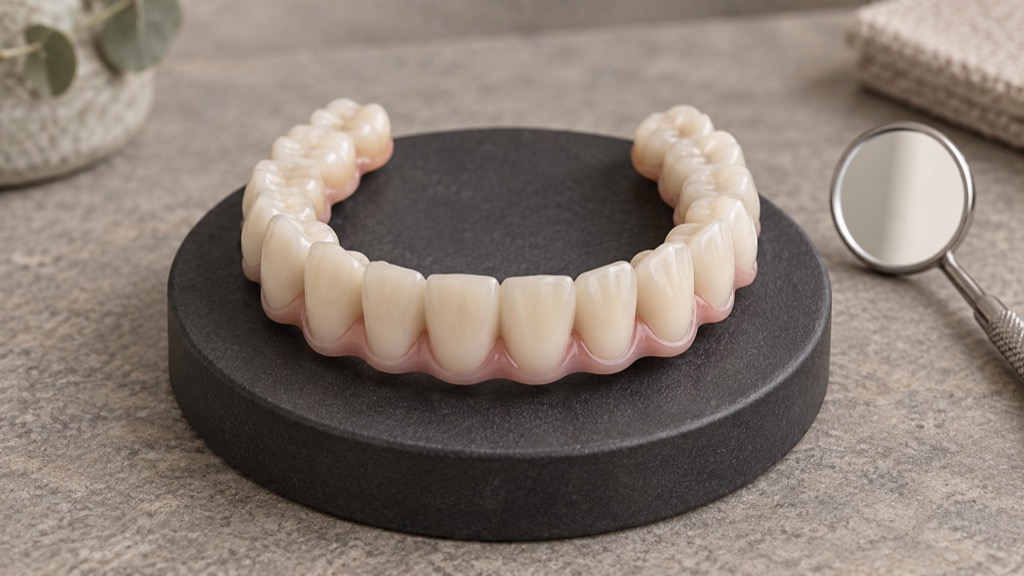
In summary. Full arch rehabilitation with All-on-4 or All-on-6 replaces all the teeth in an arch with a fixed prosthesis screwed onto four or six implants. The indication is established starting from the bone quality and volume measured with CBCT, not from the desire to have "fixed teeth the same day": immediate loading is only possible when the primary stability of the implants is adequate, and in some clinical conditions the protocol is not indicated at all.
What are All-on-4 and All-on-6
All-on-4 and All-on-6 are two variations of the same concept: an entire dental arch supported respectively by four or six implants, onto which a fixed prosthesis is screwed. They are designed for the person with a completely edentulous arch, or with non-recoverable residual teeth destined for extraction. Compared to the total removable prosthesis, the fixed solution provides stable chewing and does not rest on the mucosa. The technical characteristic of the All-on-4 approach is the inclination of the two posterior implants, which allows the available bone to be exploited, avoiding, in many cases, extensive grafts. It is not a solution "for everyone" and it is not a shortcut: it is a protocol with precise selection criteria, which start with diagnostics.
Who is the candidate: bone quality is measured, not assumed
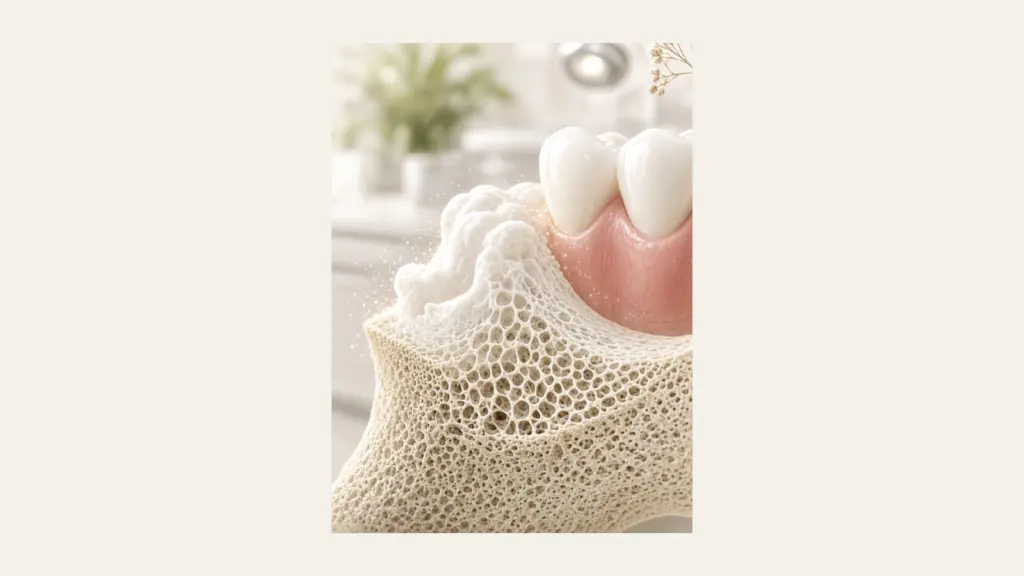
The candidate for fixed arch rehabilitation is the edentulous or close to edentulous person in whom the residual bone, due to volume and density, can guarantee the primary stability of the implants on the day of surgery. This evaluation is not done by eye or on orthopantomography alone: it requires a cone beam computed tomography (CBCT), which in Studio Buniato is acquired with the Planmeca VISO G3. The three-dimensional exam measures the height and thickness of the bone crest, identifies the structures to be respected (maxillary sinus, inferior alveolar nerve, foramina) and allows you to plan the position, length and inclination of each implant before entering the operating room. It is the phase that distinguishes a planned rehabilitation from an improvised one. Where the bone is sufficient and the density allows good initial anchorage, the case is favorable; where it is lacking, alternatives such as additional implants, regenerative techniques or deferred loading are evaluated. The general medical condition, smoking and oral hygiene are included in the same analysis: they are variables that weigh on the long-term prognosis.
All-on-4 or All-on-6: what's the real difference?
The difference is not "more implants, more safety", but a choice guided by the anatomy and the forces at play. All-on-6 distributes the load over a greater number of implants and can be preferred when the bone allows it and the occlusal framework requires it; All-on-4 reduces the number of implants and, with the inclination of the posterior ones, limits the use of grafts. From the point of view of documented results, a randomized clinical trial that directly compared the two configurations at five years found no statistically significant differences in implant survival or marginal bone loss between the two groups (Tallarico et al., 2016): both performed as predictable options in the medium term. This means that the decision between four and six implants is made on a case-by-case basis, on the basis of the CBCT and the prosthetic plan, and not on the basis of an alleged superiority of one of the two schemes. Anyone looking for a single answer that applies to everyone is asking the wrong question.
The computer-guided surgical-prosthetic protocol
Three-dimensional planning translates into guided surgery: on CBCT data, integrated with the optical scan of the arches acquired with the scanner 3Shape TRIOS 6, the position of each implant is designed and, when indicated, a surgical guide is created which transfers the project to the mouth. The digital flow reduces approximation: the implant position is decided in the study phase, not improvised during the operation, and is consistent with the prosthetic project from the beginning. The implants used are Nobel Biocare branded. During the operation, the primary stability of each implant is measured: this is the data that establishes whether it is possible to proceed with immediate loading or whether it is better to wait for osseointegration. Intra- and post-operative pain is controlled with local anesthesia and medication to manage recovery; the declared objective is not a promise of absence of discomfort, but a predictable and monitored path.
Immediate load: when it is possible and what the literature says
Immediate loading - i.e. the application of a temporary fixed prosthesis in the hours following the operation - is not automatic: it depends on the primary stability achieved by the implants. When this is adequate, the literature does not highlight clinically relevant disadvantages compared to conventional deferred loading: a Cochrane systematic review on implant loading times found no convincing evidence of a clinically important difference in prosthetic failures, implant failures or bone loss between immediate loading and conventional loading (Esposito et al., 2013). In other words, immediacy is not a compromise on safety when conditions allow it; but it remains a conditioned possibility, not a right acquired through intervention. If stability is not sufficient, the correct choice is to postpone the load: forcing in these conditions increases the risk of failure.
The same-day provisional prosthesis and definitive materials
When immediate loading is indicated, the fixed temporary prosthesis can be made the same day. The digital flow allows the temporary to be milled or printed on site: the practice uses chairside 3D printing with the SprintRay MIDAS system, which reduces waiting times and allows the delivery of a fixed screw-retained solution in the same operational phase. The provisional is not the finish line, but a stage: it accompanies healing and osseointegration for a few months, during which functional and aesthetic adaptation occurs. Only at the end of this phase is the definitive prosthesis created, with materials chosen according to the case - titanium or zirconia structures with aesthetic coating. The provisional-definitive sequence is not a duplication of work: it is the way in which the result is checked before making it stable.
Maintenance and controls over time
Fixed rehabilitation of the arch does not end with the delivery of the definitive prosthesis: maintenance begins there. Periodic clinical and radiographic checks and dedicated professional hygiene sessions are foreseen, because the screw-retained prosthesis requires specific cleaning of the underlying spaces. Long-term data support the choice when the path is followed consistently: a longitudinal study on mandibular All-on-4 with follow-up up to 18 years reports a prosthetic survival of 98.8% and an implant survival of 93% (Maló et al., 2019). However, the same data show that biological and mechanical complications can occur and that smoking and poor maintenance increase the probability: longevity does not depend on the intervention alone, but is built over time together with the patient.
When fixed arch rehabilitation is NOT indicated
There are situations in which the protocol is not the correct choice, and declaring this is part of the clinical evaluation. It is not indicated in the presence of non-stabilised periodontitis: active infection and inflammation must be treated and brought under control before any implant insertion, otherwise the prognosis is affected. It is not indicated when expectations are unrealistic, for example the request for a result without intermediate phases, without maintenance or without biological limits: serious rehabilitation is based on shared and verifiable objectives. And it is not indicated when the person is not in a position to guarantee the necessary follow-up and home and professional hygiene: without maintenance, the risk of complications increases and the advantage of the fixed solution is reduced. In these cases, alternatives are discussed, from preliminary periodontal stabilization to other prosthetic paths. The criterion is always the same: the real prognosis, not the technical feasibility of the intervention itself.
Frequently asked questions
Will I really have fixed teeth on the same day as the surgery?
Only if the primary stability of the implants measured during the operation is adequate. In that case, a fixed temporary prosthesis is applied, screwed on the same day, which can be made with 3D printing on site. If stability is not sufficient, the correct choice is to wait for osseointegration: forcing immediate loading in unfavorable conditions increases the risk of failure.


He explains what he is doing and what you may feel before each step
Show less
I’m writing a little more than I usually would because I know how difficult it can be to find a dentist you genuinely feel comfortable with — especially when you are looking for treatment abroad. I came to Turin for dental treatment and honestly could not be happier that I found Dr. Buniato.
What impressed me from the beginning was how thorough and transparent everything was. He takes the time to do a proper assessment, with detailed images and analysis, and then explains clearly what is going on, what the different options are, which one he recommends and what each option would cost. You are never left in the dark or simply expected to trust that someone knows what is best for you. You understand what is being done, why it is being done and what to expect.
That same care continues throughout the treatment. He explains what he is doing and what you may feel before each step, so you are never caught by surprise. You can tell that he is incredibly precise and genuinely cares about getting every detail right.
And the result exceeded my expectations. I had virtually no pain afterwards, despite expecting quite the opposite. The work looks excellent, but even more importantly, it feels completely natural. After dental work, there is usually some adjustment period — you notice that something has changed, or your bite may feel different. With Dr. Buniato, I had none of that. Everything felt completely natural from the moment I left the chair.
I was also genuinely impressed by the technical standard of the practice. The equipment and technology are on a level I have rarely seen, and it is clear that they are used with real expertise rather than simply being there for show.
The whole team is warm, attentive and professional, and you get the feeling that they are willing to take the time needed to do things properly.
I would genuinely recommend Dr. Buniato to anyone looking for excellent dental care in Turin. I’m very happy I found him and will definitely be back for my future treatment.
Better All-on-4 or All-on-6?
There is no one-size-fits-all answer. The choice depends on the bone volume and density detected with CBCT and the prosthetic design. A five-year randomized study found no statistically significant differences in survival or bone loss between the two configurations: both remained predictable medium-term options. The decision is made on a case-by-case basis.

From the very first appointment, I was impressed by the care and clarity with which solutions were proposed to me
Show less
I contacted Dr Gianluca Buniato’s dental practice for advice and a possible estimate to address my many complex dental problems. From the very first appointment, I was impressed by the care and clarity with which solutions were proposed to me, and I was soon able to see how effective they were. I feel I should thank Dr Buniato and his team not only for the professionalism with which they work in a dental practice using excellent technology, at very reasonable prices, but also for their ability to put patients at ease at all times.
Is the temporary also the definitive prosthesis?
No. The provisional prosthesis supports the healing and osseointegration phase for a few months. The definitive prosthesis is created at the end of this phase, with materials chosen based on the case, such as titanium or zirconia structures with aesthetic coating.

attentive and always willing to explain every stage of treatment.
Show less
I began treatment with Dr Gianluca Buniato to straighten my teeth as an adult — I am 40 — and I can say it was one of the best decisions I could have made. Thanks to a carefully planned course of orthodontic treatment lasting less than two years, I achieved results I would never have thought possible: my smile has changed completely and I finally feel confident showing it!
Dr Buniato is extremely precise, attentive and always willing to explain every stage of treatment. The entire team is also kind, welcoming and very well organised. The practice, on Corso Francia in Turin, is carefully designed down to the smallest detail and immediately gives you a sense of trust and calm.
Although I live quite far from the practice, the excellent reviews persuaded me to put my trust in the doctor, and I can confirm that it was the right choice.
I absolutely recommend this practice to anyone who wants to improve their smile with professionalism, technology and plenty of personal attention.
How long does an All-on-4 rehabilitation last?
Long-term data are favorable when maintenance is constant: a study with follow-up up to 18 years reports a prosthetic survival of 98.8% and implant survival of 93%. The actual duration depends on hygiene, periodic checks and individual factors such as smoking, which increases the risk of complications.

He works with great attention to patients’ needs.
Show less
I have known the Buniato dental practice for several years, after various experiences at other practices! I have always had a good experience: the doctor and his colleagues are knowledgeable, kind and precise. He has always advised me tactfully but professionally, and I must say that, although I am quite afraid of the dentist, I feel calm with him. He works with great attention to patients’ needs. Thank you again. Elisabetta
I have periodontitis: can I still have this procedure?
Not as long as periodontitis is active. Infection and inflammation must be stabilized before inserting implants, because uncontrolled periodontitis worsens the prognosis. Periodontal stabilization is a preliminary stage, not a definitive obstacle.

The dentists are professional and attentive to each patient’s particular sensitivities.
Show less
The practice has a very welcoming waiting room, and all the rooms are bright and clean. The staff are professional, and the reception team is well organised when it comes to information, appointments and email reminders for them. The dentists are professional and attentive to each patient’s particular sensitivities. In conclusion, I am fully satisfied with the treatment and the result achieved.
Is a bone graft always necessary?
Not always. The inclination of the posterior implants in the All-on-4 approach allows in many cases to exploit the available bone while avoiding extensive grafts. The need for bone regeneration is established on the basis of CBCT, on a case-by-case basis.

From the start, the doctor was very helpful and courteous and clearly explained the work he would need to do.
Show less
I did not know Dr Buniato and found him through an internet search. My old bite splint had broken, and I was looking for a practice that used cutting-edge techniques to make a new one. From the start, the doctor was very helpful and courteous and clearly explained the work he would need to do. Once the splint had been made, we had to meet several times so that he could adjust it to fit my teeth as well as possible. Now I have a splint that does its job perfectly. Above all, I greatly appreciated his human warmth, helpfulness, courtesy, calm manner and ability to explain the various steps that would follow. The reception staff are excellent too. The practice is clean, modern and well cared for. What can I say: these days, a doctor like this is almost a rarity. So I recommend him and thank him sincerely.
Sources
- Soto-Penaloza D, Zaragozí-Alonso R, Peñarrocha-Diago M, Peñarrocha-Diago M. The all-on-four treatment concept: Systematic review. J Clin Exp Dent. 2017;9(3):e474-e488. doi:10.4317/jced.53613. PubMed.
- Maló P, de Araújo Nobre M, Lopes A, Ferro A, Botto J. The All-on-4 treatment concept for the rehabilitation of the completely edentulous mandible: A longitudinal study with 10 to 18 years of follow-up. Clin Implant Dent Relat Res. 2019;21(4):565-577. doi:10.1111/cid.12769. PubMed.
- Tallarico M, Meloni SM, Canullo L, Caneva M, Polizzi G. Five-Year Results of a Randomized Controlled Trial Comparing Patients Rehabilitated with Immediately Loaded Maxillary Cross-Arch Fixed Dental Prosthesis Supported by Four or Six Implants Placed Using Guided Surgery. Clin Implant Dent Relat Res. 2016;18(5):965-972. doi:10.1111/cid.12380. PubMed.
- Esposito M, Grusovin MG, Maghaireh H, Worthington HV. Interventions for replacing missing teeth: different times for loading dental implants. Cochrane Database Syst Rev. 2013;(3):CD003878. doi:10.1002/14651858.CD003878.pub5. PubMed.
For an evaluation of your specific case, the first specialist visit includes the complete diagnostic analysis, with the CBCT study necessary to establish the most suitable indication and configuration.